Fanja Bouts x Chapter Arts Centre x Global Gardens Project, 2025
Food event, exhibition and set of screenings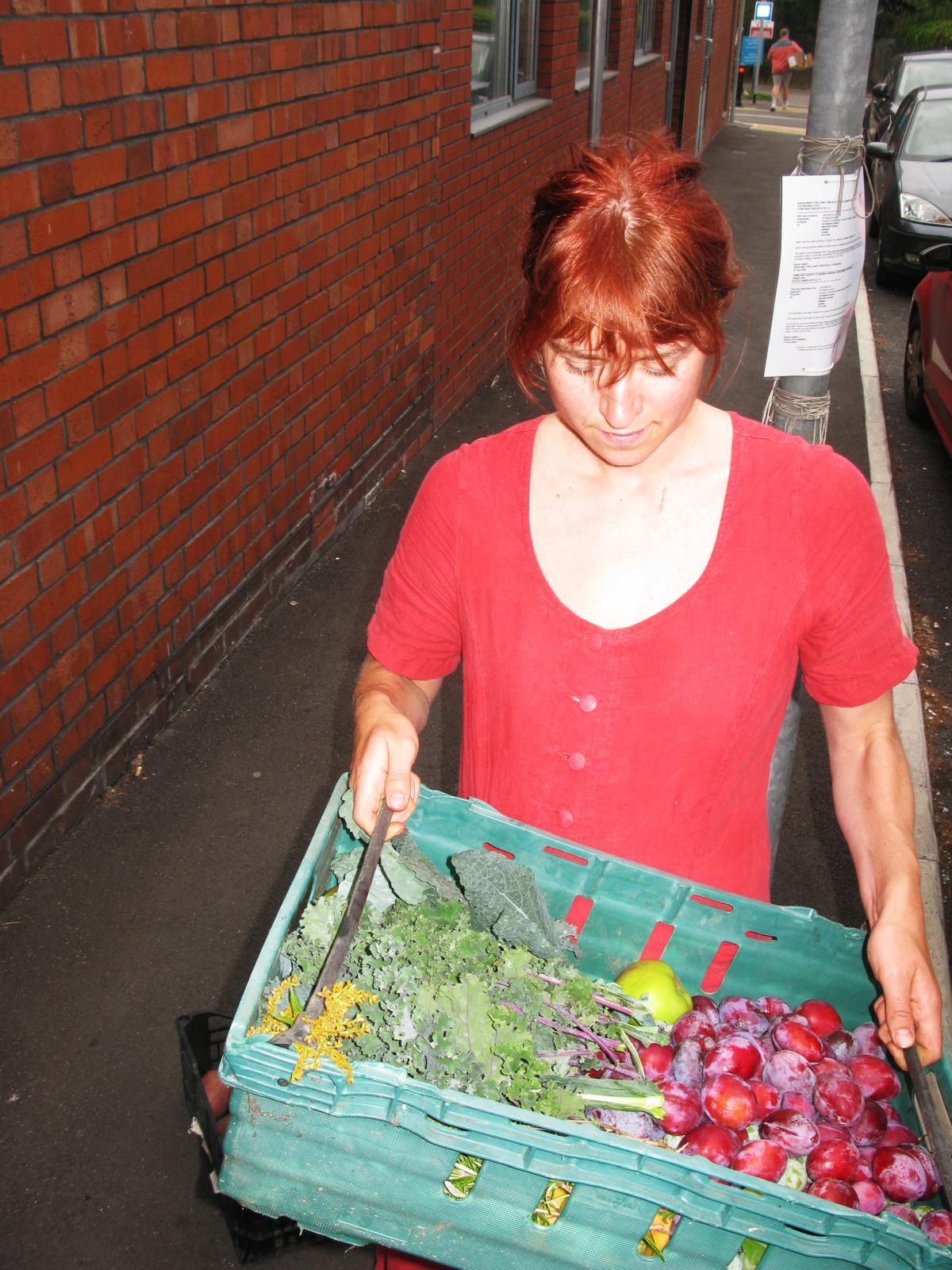

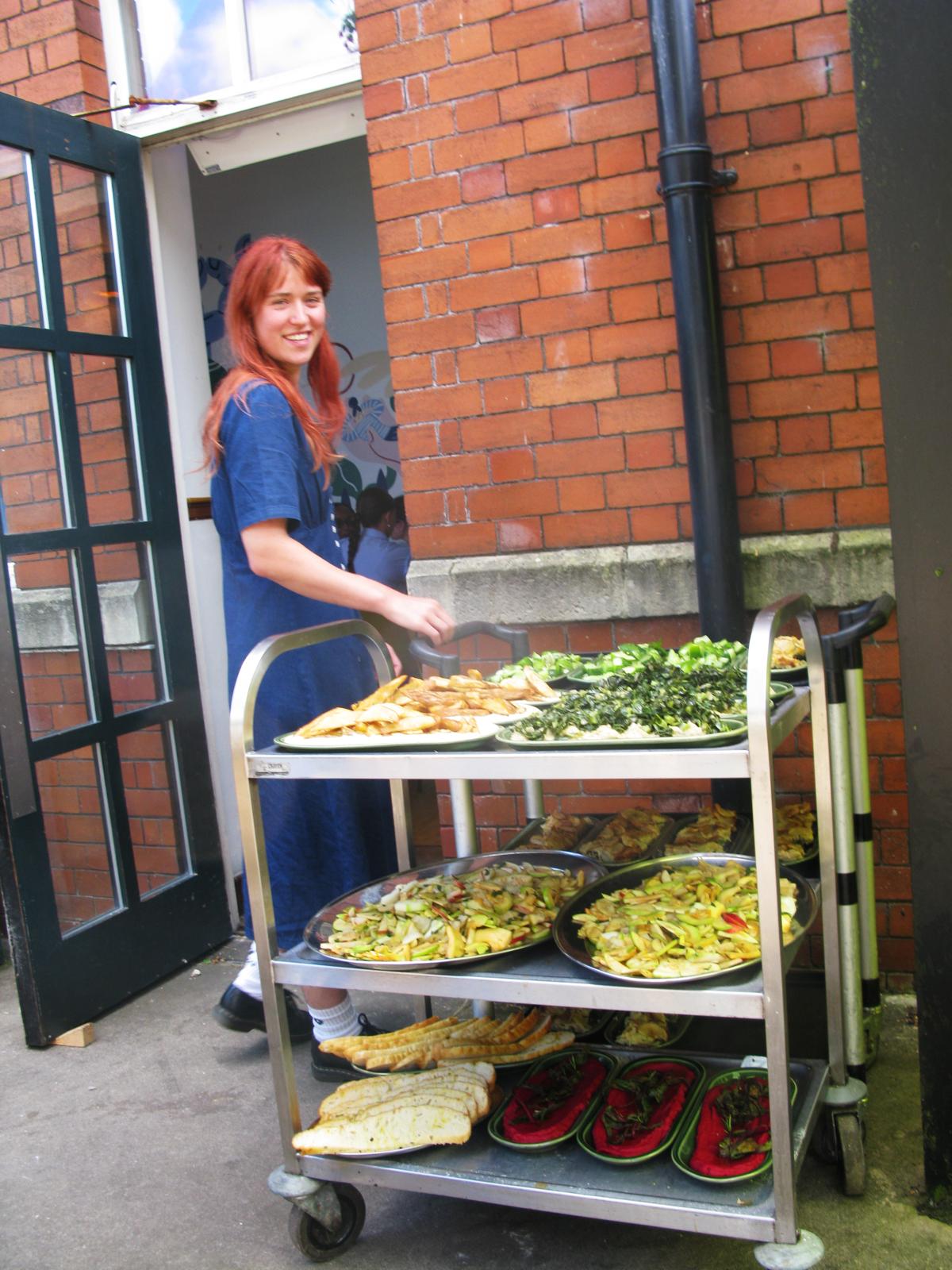
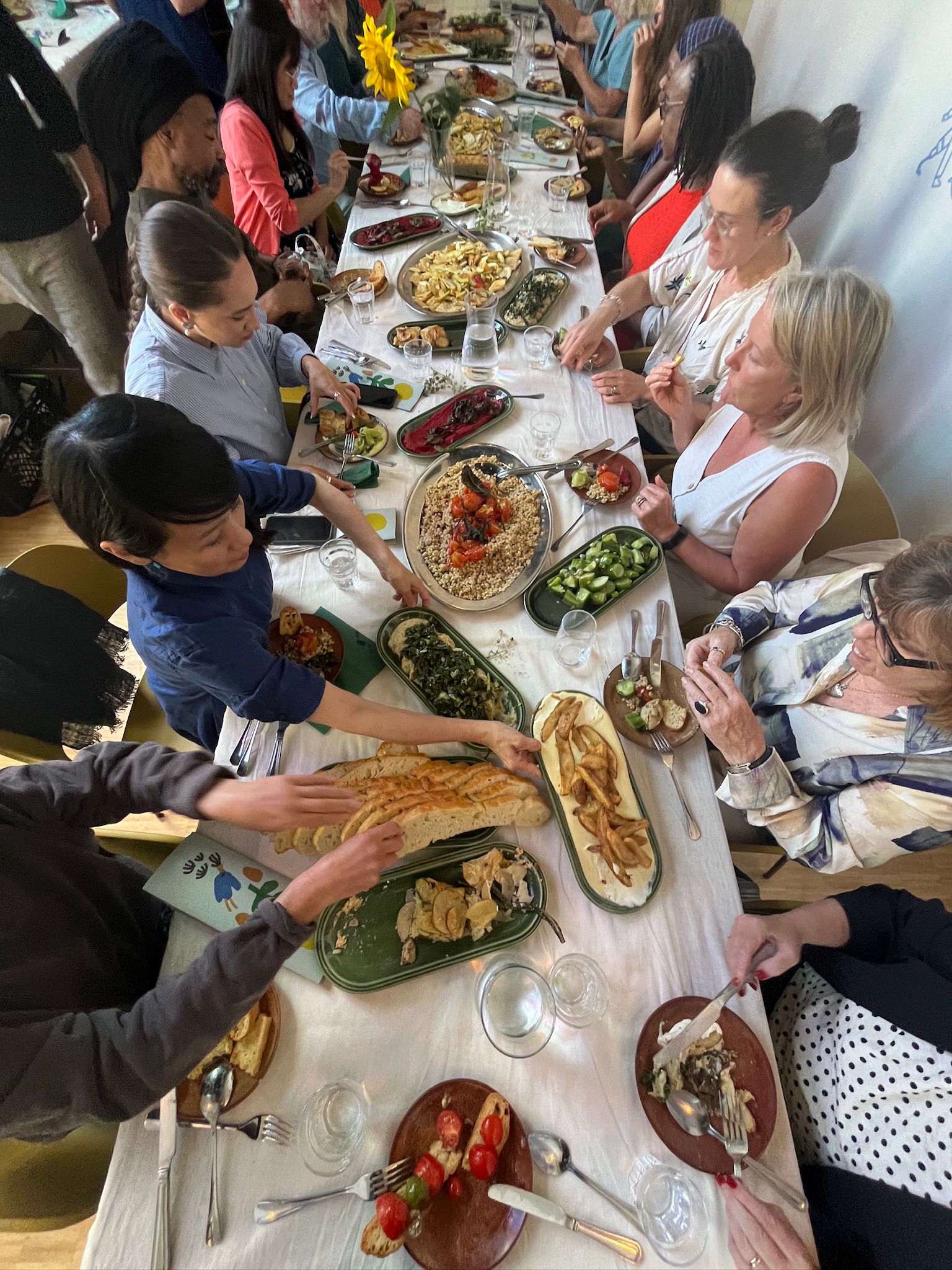
Courgette chilled soup with toasted Fennel seeds and honeyed pickled flowers + Toasted fennel focaccia
Grilled focaccia with a variety of tomatoes and greenguages, in a sorrel / garlic / olive oil dressing
Salad of varying apple and marrow species, in a rosehip and goldenrod dressing, topped with sweet Cecily and roasted goldenrod flowers
Beetroot hummus with roasted beet-greens + fresh focaccia
Pureed apple cooked with Chapter honey, topped with salted seakale braised with chamomile
Cucumber, lupines, mint
Potato, cavolo nero tart with marrow and chickpea cream
Roast potatoes in a rosemary aquafaba cream
Pearl barley with toasted sage and summer savory in white wine, semi-sundried tomatoes, fresh sage flowers
Coconut olive oil lavender ice-cream, plums in amaretto, almond lavender coconut brittle, plum and Chapter honey puree
In collaboration with Chapter Arts Centre I set up an event
to come together and think about consumption, care and co-existence otherwise. Here, the community gardeners, studio associates and friends of the space were invited.
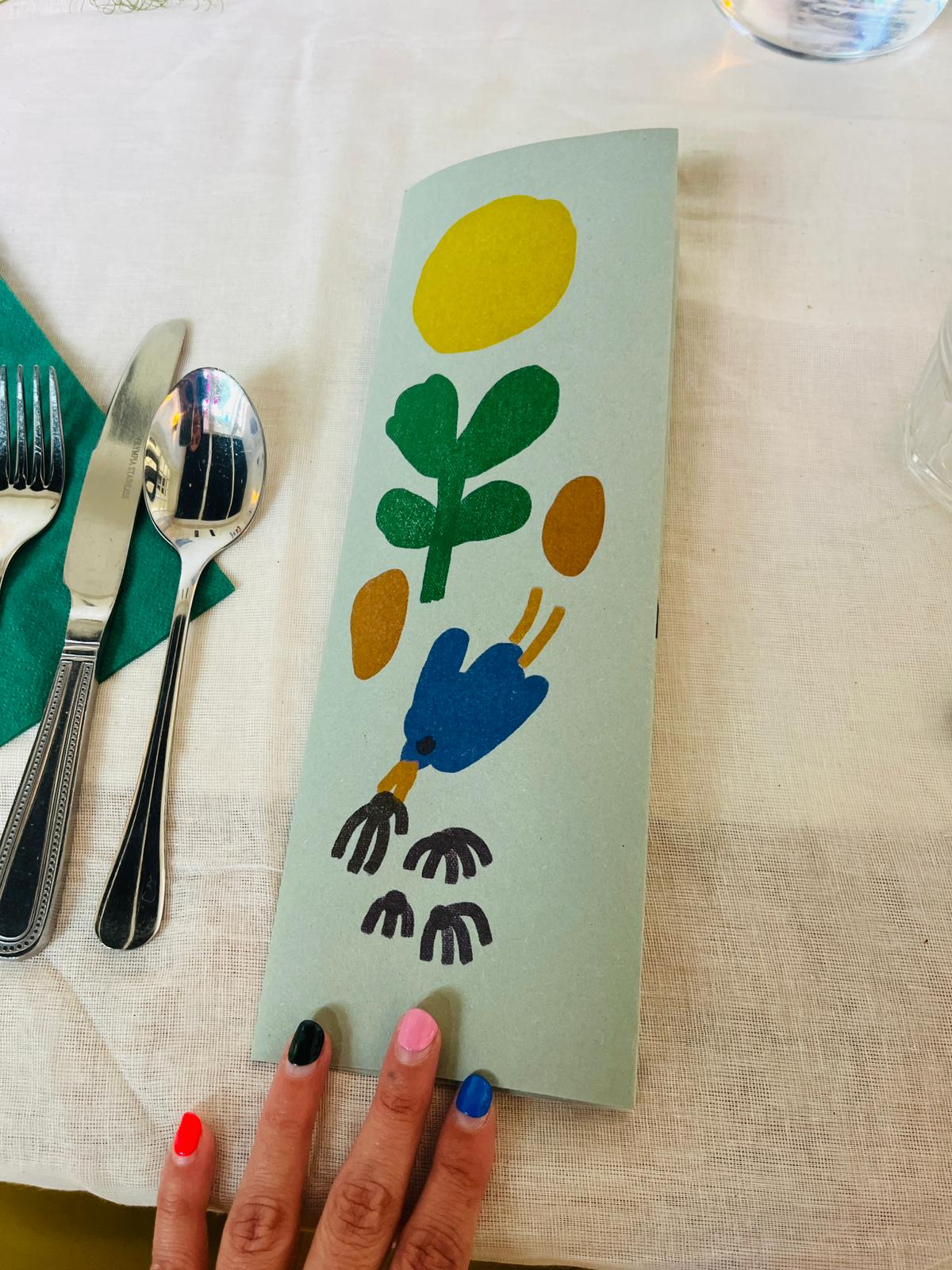
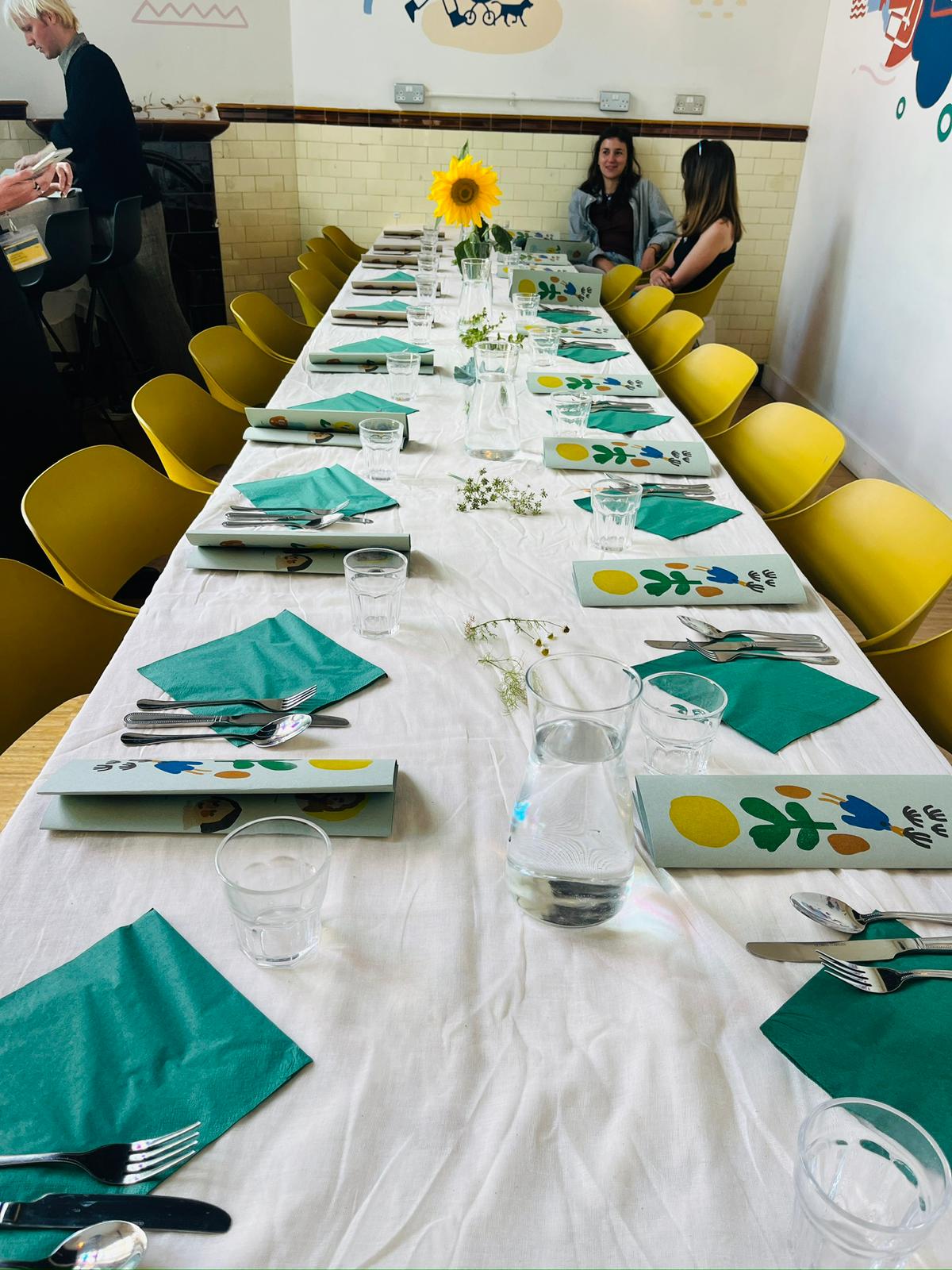
Using fruit and vegetables solely from Chapter’s own community garden and community growing project Global Gardens Project, I created a hyper-local menu celebrating nourishment, conversation and connection. The menu was based on what was available at that moment of time, and in that little piece of planet. We paid attention to not taking food for granted, recognizing the importance of community (non-human and human) and how to give thanks to those who have worked hardest for your food, portrayed in a drawn map in the shape of a menu on the table: The soil, the critters within, our sun, or atmosphere and the many other elements.
Below, I share some of the text that was recited and the menu, not including the stories that were shared about each of the plants and herbs that were shared during the day.
This event is an addition to the exhibition of my tapestry ‘A Largely Distorted yet Surprisingly Ordered Map of Regular Irregularities: A Dense Description of The Present Day History of The Future’, and is joined by a series of screenings zooming in on degrowth, nature, climate change, a different way of thinking about food and environmental degradation at Chapter Cinema.
![]()
Snippet of the opening speech:
‘A lot of the food we eat is grown as if they exist in a world of their own, a vacuum of just that species. Most of that food is grown in perfect rows, no weed or bug in sight, in the name of efficiency. In traditional farming you are constantly coming up with ways to make up the imbalance you have created by having a single species occupy the land. By having several species of plants, insects and other organisms work together on a plot of land, you create a web of relations that protects your crop in so many ways that in the long run it beats any pesticide, herbicide or fertilizer.
Today we will be sharing some of the species that were collaboratively helped to grow and flourish.
At each dish I will give you a little insight into the plant, telling you of how this particular crop came to be, either through insect or larger animal collaboration or mutualism, or the human pathways that once brought these species to the land. I think it is important to stop and contemplate the story of our food. First, because what we buy in the grocery store is an act of protest, and by knowing the story of our food we make better decisions as humans as part of an ecosystem: Choosing not to buy non-organic, non-regeneratively grown foods is a vote against the very institutions that keeps these practices into place. It is also important because through the widespread practice of farming of monocultures and the way many humans in the west have become separated from the knowledge of farming we once needed to survive, we have created a narrative that every type of crop and dish should be readily available to us year-round. A mindset that has created huge inefficiency and waste, resulting in a system where we could feed everyone on the planet, but instead 25.000 people die of hunger every day. I come from the Netherlands where we have no natural forests left as our landscape consists of rows and rows of crops and a whole west-land covered in green-houses, lit and heated throughout the year, where 99% of fossil energy seeps out through heat loss, just to have tasteless tomatoes mid-winter. The land-crops grown with synthetic fertilizer produced from fossil fuels. A tiny land where farming is so intensive that our groundwater is becoming increasingly unusable, while each year our water grows more scarce. Where daily we kill 1.4 million chickens and 400.000 pigs, moral objectifications aside creating huge environmental issues. The feed for animals grown in plots of land once part of the amazon, now shipped across the world to Europe, to have soy for animals to eat rather than for ourselves. Locally created environmental issues cannot be underestimated: The environment spans over the globe and environmental degradation is felt everywhere. The choice to pollute our waters here through fertilizer runoff, will kill marine species everywhere, and will add to the positive feedback loops driving up climate change, hitting the poorest communities in the world the hardest. And not just that, we are losing 100.000 species each year, and the way we eat and farm plays a significant role in the sheer size of this number.
So, the story of our food is important, to understand that food does not and should not just appear year-round in every shape and form. Rather, that we exist in an ecosystem that is growing in fragility by choices of our own, and by fighting for different choices to be made we can create a robust system of entangles species relations, protecting our crops and stepping closer to fairer considerations and distributions.
The crops that will be nourishing us today were provided by the gardens of Chapter and the plants and trees of Global Gardens. I emphasize before that it takes a web of relations of species to grow crops in a fair and just way, and a community of humans that centre care for the whole ecosystem instead of single crop is a crucial part of this. I will give the word to Poppy and Roger in a bit to elaborate on this, but we will first move to the first dish.’
![]()
![]()
Using fruit and vegetables solely from Chapter’s own community garden and community growing project Global Gardens Project, I created a hyper-local menu celebrating nourishment, conversation and connection. The menu was based on what was available at that moment of time, and in that little piece of planet. We paid attention to not taking food for granted, recognizing the importance of community (non-human and human) and how to give thanks to those who have worked hardest for your food, portrayed in a drawn map in the shape of a menu on the table: The soil, the critters within, our sun, or atmosphere and the many other elements.
Below, I share some of the text that was recited and the menu, not including the stories that were shared about each of the plants and herbs that were shared during the day.
This event is an addition to the exhibition of my tapestry ‘A Largely Distorted yet Surprisingly Ordered Map of Regular Irregularities: A Dense Description of The Present Day History of The Future’, and is joined by a series of screenings zooming in on degrowth, nature, climate change, a different way of thinking about food and environmental degradation at Chapter Cinema.
Snippet of the opening speech:
‘A lot of the food we eat is grown as if they exist in a world of their own, a vacuum of just that species. Most of that food is grown in perfect rows, no weed or bug in sight, in the name of efficiency. In traditional farming you are constantly coming up with ways to make up the imbalance you have created by having a single species occupy the land. By having several species of plants, insects and other organisms work together on a plot of land, you create a web of relations that protects your crop in so many ways that in the long run it beats any pesticide, herbicide or fertilizer.
Today we will be sharing some of the species that were collaboratively helped to grow and flourish.
At each dish I will give you a little insight into the plant, telling you of how this particular crop came to be, either through insect or larger animal collaboration or mutualism, or the human pathways that once brought these species to the land. I think it is important to stop and contemplate the story of our food. First, because what we buy in the grocery store is an act of protest, and by knowing the story of our food we make better decisions as humans as part of an ecosystem: Choosing not to buy non-organic, non-regeneratively grown foods is a vote against the very institutions that keeps these practices into place. It is also important because through the widespread practice of farming of monocultures and the way many humans in the west have become separated from the knowledge of farming we once needed to survive, we have created a narrative that every type of crop and dish should be readily available to us year-round. A mindset that has created huge inefficiency and waste, resulting in a system where we could feed everyone on the planet, but instead 25.000 people die of hunger every day. I come from the Netherlands where we have no natural forests left as our landscape consists of rows and rows of crops and a whole west-land covered in green-houses, lit and heated throughout the year, where 99% of fossil energy seeps out through heat loss, just to have tasteless tomatoes mid-winter. The land-crops grown with synthetic fertilizer produced from fossil fuels. A tiny land where farming is so intensive that our groundwater is becoming increasingly unusable, while each year our water grows more scarce. Where daily we kill 1.4 million chickens and 400.000 pigs, moral objectifications aside creating huge environmental issues. The feed for animals grown in plots of land once part of the amazon, now shipped across the world to Europe, to have soy for animals to eat rather than for ourselves. Locally created environmental issues cannot be underestimated: The environment spans over the globe and environmental degradation is felt everywhere. The choice to pollute our waters here through fertilizer runoff, will kill marine species everywhere, and will add to the positive feedback loops driving up climate change, hitting the poorest communities in the world the hardest. And not just that, we are losing 100.000 species each year, and the way we eat and farm plays a significant role in the sheer size of this number.
So, the story of our food is important, to understand that food does not and should not just appear year-round in every shape and form. Rather, that we exist in an ecosystem that is growing in fragility by choices of our own, and by fighting for different choices to be made we can create a robust system of entangles species relations, protecting our crops and stepping closer to fairer considerations and distributions.
The crops that will be nourishing us today were provided by the gardens of Chapter and the plants and trees of Global Gardens. I emphasize before that it takes a web of relations of species to grow crops in a fair and just way, and a community of humans that centre care for the whole ecosystem instead of single crop is a crucial part of this. I will give the word to Poppy and Roger in a bit to elaborate on this, but we will first move to the first dish.’